
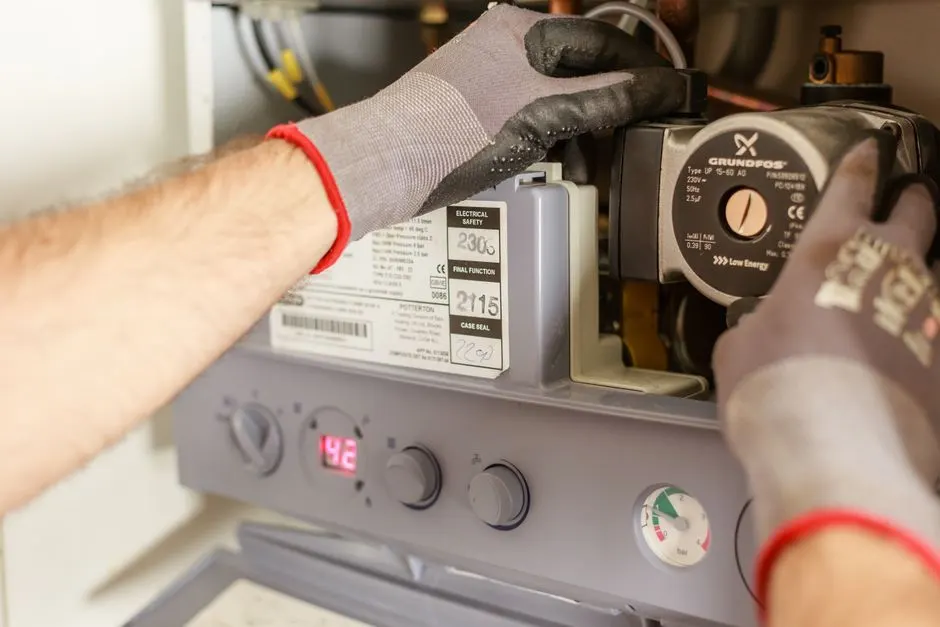
Full No-Heat Diagnostic
We test the breaker, thermostat, igniter, flame sensor, gas valve, blower motor, and heat exchanger. You get a clear explanation of what failed and why, not just a parts list.
Every emergency call includes a full diagnostic, a written price before work starts, and a tested repair. If a job needs a part we do not stock or a permit we cannot pull same-day, we tell you on the spot and schedule the return visit at no extra diagnostic charge.
We test the breaker, thermostat, igniter, flame sensor, gas valve, blower motor, and heat exchanger. You get a clear explanation of what failed and why, not just a parts list.
The price you hear before we start is the price on the invoice. If the diagnosis changes mid-job, we stop and get your approval before continuing.
Most common failures get fixed on the first visit because our vans carry igniters, flame sensors, thermocouples, capacitors, gas valves, and control boards for major brands.
Every gas repair ends with a combustion analyzer reading and a flue check. If we find a cracked heat exchanger or a carbon monoxide risk, we tell you immediately and walk you through options.
We run the furnace through a complete heating cycle, verify temperature rise at the plenum, and confirm the thermostat holds before we leave. You see it working with your own eyes.
Replacement parts carry the manufacturer warranty, and our labor is warrantied too. If the same failure comes back inside the window, we return and make it right.
Emergency Furnace Repair in Colorado is urgent, same-visit troubleshooting and repair of a heating system that has stopped producing heat, typically completed within two to four hours of arrival. A technician pulls the fault codes, tests the igniter and flame sensor with a multimeter, checks gas pressure at the valve with a manometer, and inspects the heat exchanger with an inspection camera before touching a single part. Most no-heat calls trace back to a dirty flame sensor, a failed igniter, a tripped breaker, or a blower motor that has quit spinning.
Colorado winters do not negotiate. Front Range cold snaps drop into single digits overnight, mountain towns like Aspen and Woodland Park see minus-20 wind chills, and high-altitude air thins combustion enough that furnaces run richer and sootier than at sea level. That is why furnace not working emergency repair Colorado calls spike every November through March. If your furnace is blowing cold air, short cycling, or making a banging noise, call (833) 588-3896 and we will get a tech rolling.
From the first ring to the final temperature check, here is exactly how an emergency call runs with our team.
Schedule
Call or book online — a real human picks up and confirms a 2-hour arrival window.
Diagnose
Licensed tech inspects on-site, then walks you through the cause and your options.
Fix
The job is completed to code and done right the first time — no shortcuts, no surprises.
Guarantee
Every job backed by a written workmanship warranty — and we stand behind it.
Combustion Analyzer
Measures flue gas oxygen, carbon monoxide, and temperature to confirm the furnace is burning safely and efficiently after every gas repair.
Manometer
Checks gas inlet and manifold pressure against the manufacturer spec, which matters at Colorado altitudes where pressure settings often need adjustment.
Clamp Meter and Multimeter
Traces amp draw and voltage on the blower motor, igniter, and control board to isolate electrical faults instead of guessing at parts.
Inspection Camera
Lets us see inside the heat exchanger and flue without tearing the furnace apart, so cracks and blockages get caught early.
Vacuum Gauge
Verifies gas line pressure and confirms there are no restrictions feeding the furnace, which is a common cause of weak or intermittent heat.
Thermostat Test Kits
Compatible with Nest, Honeywell, and standard thermostats so we can rule out control-side problems before diagnosing the furnace itself.
ACCA Manual J Load Verification
We check that the furnace is sized correctly for the home and altitude. An oversized furnace short cycles and wears out fast, and an undersized one never keeps up on the coldest nights.
NATE-Certified Diagnostic Sequence
Our techs follow a fixed diagnostic order: power, thermostat, ignition, gas, airflow, then heat exchanger. That sequence catches the real failure faster and avoids replacing parts that are still good.
EPA Section 608 Handling Practices
Any refrigerant-related work on heat pump and dual-fuel systems follows EPA Section 608 rules for recovery, handling, and documentation.
OSHA Gas Safety Protocol
Gas-side repairs follow OSHA safety compliance, including leak testing, lockout procedures, and combustion verification before the furnace goes back into service.
01
What we do: We dispatch a technician immediately, day or night, and prioritize no-heat calls when temperatures are below freezing. The tech arrives with diagnostic tools and common parts ready to go.
→ Most overnight no-heat calls are back up and running within two to four hours, before pipes or occupants are at risk.
02
What we do: Leave the house and call your gas utility first, then call us. We inspect the gas valve, burners, flue, and heat exchanger with a combustion analyzer and inspection camera to find the source.
→ You get a clear answer on whether the furnace is safe to run, and any gas-side repair is made to code before the system goes back online.
03
What we do: We test the igniter, flame sensor, gas valve, and blower motor to find where the heat cycle fails. Most of these calls are a dirty flame sensor or a failed igniter, both of which we stock on the van.
→ Heat is restored on the first visit in most cases, and we verify temperature rise before leaving.
04
What we do: We trace the electrical fault with a clamp meter, checking the blower motor, capacitor, wiring, and control board. We repair the cause and confirm the amp draw is within spec.
→ The furnace runs a full cycle without tripping, and you avoid the fire risk of repeatedly resetting a breaker on a faulty circuit.
05
What we do: We run holiday dispatch, including Thanksgiving, Christmas, and New Year's. A live dispatcher takes the call and sends the nearest available tech with a stocked van.
→ Guests arrive to a warm house instead of a cold one, and the repair is warrantied if anything comes back.
Colorado is not one climate, it is five. The Front Range swings from 60-degree afternoons to single-digit nights in the same week, the foothills around Conifer and Evergreen deal with heavy snow load and power flickers, and high-country towns like Aspen and Leadville run furnaces at 8,000 to 10,000 feet where thin air changes combustion. Western Slope addresses in Mancos and Cortez see drier air and different gas pressure profiles. That variation is why we adjust gas pressure, airflow, and temperature rise to the altitude and the home, not to a generic spec sheet. We also know the building stock: older Denver and Pueblo homes with undersized returns, 1990s subdivisions in Broomfield and Castle Rock with original furnaces now failing in waves, and rural properties on propane or well water that affect the heating system. When you call for after hours furnace repair Colorado, you get a tech who has worked your kind of house before.
Front Range suburbs (Broomfield, Castle Rock, Monument)
Mostly 1990s to 2010s construction with original or first-replacement furnaces. We see a lot of failed igniters and control boards in this housing stock.
Foothills communities (Conifer, Evergreen, Woodland Park)
Heavy snow, power flickers, and longer drive times. We stock universal parts so we can finish most calls in one trip instead of two.
High country (Aspen, Leadville, Breckenridge)
Altitude above 8,000 feet changes combustion. Gas pressure and airflow often need adjustment from factory settings to run clean.
Rural and agricultural (Kersey, Fort Lupton, Bennett)
Propane systems, outbuildings, and longer dispatch distances. We confirm fuel type on the phone so the van arrives with the right parts.
Altitude above 5,000 feet across most of the state
Thin air changes combustion and airflow. Furnaces often need gas pressure and blower settings adjusted from factory defaults to run clean and hot.
Rapid temperature swings on the Front Range
Furnaces cycle on and off more often, which wears igniters, flame sensors, and control boards faster than steady cold would.
Dry air and static in mountain and Western Slope homes
Static discharge can damage control boards and thermostats. We check grounding and recommend humidification when it fits the home.
Older housing stock in established neighborhoods
Undersized returns and original ductwork cause airflow problems that look like furnace failures. We check static pressure before blaming the equipment.
These are the calls that fill our schedule from November through March. If your furnace is doing any of these, do not wait for it to get worse.
Problem
The house loses heat fast, and in single-digit temperatures pipes in exterior walls can freeze within hours. Running the fan without heat also pushes cold air through every room.
Our Fix
We test the igniter, flame sensor, and gas valve to find where the heat cycle is breaking down. Most cold-air calls trace to a failed igniter or a flame sensor that needs cleaning, and both are same-visit fixes.
Problem
Short cycling wears out the blower motor and control board, spikes your gas bill, and leaves rooms unevenly heated. Left alone, it usually ends in a full breakdown on the coldest night of the year.
Our Fix
We check airflow, the air filter, the high-limit switch, and gas pressure to find what is tripping the cycle. Fixes range from a clogged filter to a failing control board, and we test the full cycle after repair.
Problem
A furnace that trips the breaker has an electrical fault that will keep getting worse. Repeated resets can damage the blower motor or the control board and create a real fire risk.
Our Fix
We use a clamp meter to trace the amp draw and isolate the fault, whether it is the blower motor, a shorted wire, or a failing capacitor. We repair the cause, not just the symptom, and verify amp draw is in spec.
Problem
Banging often means delayed ignition, where gas builds up before lighting. Screeching usually points to a blower motor bearing. Both get worse and more expensive the longer they run.
Our Fix
We inspect the burners, blower motor, and heat exchanger to find the source. Delayed ignition gets corrected at the igniter or gas valve, and blower noise usually means a motor or bearing replacement.
Problem
On high-efficiency condensing furnaces, a clogged drain or failed condensate pump can leak water into the cabinet and rust out components. On standard furnaces, leaking water often signals a blocked flue.
Our Fix
We trace the leak to the condensate system, flue, or humidifier, clear the blockage, and test drainage through a full cycle. If water has damaged the control board, we replace it and verify the fix.
A dead furnace is not a wait-until-Monday problem. Here is what you get when you call us instead of rolling the dice on the next listing in the search results.
Statewide 24/7 Dispatch
We answer the phone at 3 a.m. on a Sunday in January, and we mean it. Our dispatch covers the entire state, so 24 hour furnace repair Colorado is a real number you can call, not a voicemail box. Most no-heat calls get a technician on-site the same day.
First-Visit Fix Rate
Our vans carry igniters, flame sensors, thermocouples, capacitors, gas valves, and control boards for Lennox, Carrier, Trane, Goodman, Rheem, York, Bryant, American Standard, Amana, and Coleman systems. That stock means we finish roughly 8 out of 10 emergency calls without a return trip.
Straight Pricing, No Surprises
You get the diagnosis and a flat price before we start turning wrenches. Emergency furnace repair cost in Colorado runs $180 to $450 for most common failures, and we tell you the number up front. No after-hours markup games, no mystery line items on the invoice.
Code-Correct Repairs
Every repair meets ACCA standards and Colorado HVAC license requirements, and we pull local building permits when a job needs one. We also follow OSHA safety compliance on gas work, because a heat exchanger crack or a bad gas valve is not something to eyeball and hope for the best.
Honest 2026 pricing for emergency furnace repair in Colorado starts with a diagnostic, then a flat quote before any work begins. Most common repairs land between $180 and $450. Blower motors, control boards, and gas valves push higher, usually $500 to $900. After-hours and holiday dispatch may add a modest fee, and rural addresses sometimes add a trip charge. You hear the full number before we start, and if the diagnosis changes, we stop and talk to you first.
Typical Investment Range
$180 - $900 depending on the failed part and time of call
You are paying for a licensed tech, a stocked van, and a repair that is tested and warrantied before we leave. Cheap emergency calls that miss the real problem cost more in the end.
What changes the price
Part cost and availability
A flame sensor or igniter is inexpensive and usually on the van. A blower motor, control board, or gas valve costs more and may need a same-day parts run, which affects the total.
Time of day and day of week
Overnight, weekend, and holiday calls may carry a small dispatch premium. We tell you the exact amount on the phone before we send anyone.
System age and brand
Parts for older or less common brands like York, Amana, or Coleman can cost more and take longer to source. We check availability before quoting so the price holds.
Access and location
A furnace in a tight closet or attic takes longer to service than one in an open basement. Rural addresses like Mancos or Glen Haven may add a trip charge based on distance.
Repair vs. replace decision
When repair cost approaches half the price of a new furnace, replacement often makes more financial sense. We give you both numbers and let you decide without pressure.
Google ★★★★★4.9
Called at midnight with no heat and a newborn in the house. Tech was here in about 90 minutes, found a bad igniter, and had us warm before 2 a.m. Price was exactly what dispatch quoted. Cannot ask for more than that.
Yelp ★★★★★4.8
Our furnace was short cycling and two other companies just wanted to sell us a new one. These guys tested everything, replaced a capacitor, and cleaned the flame sensor. Furnace has run perfectly since. Honest work.
BBB ★★★★★4.9
We are at 8,000 feet and our furnace never kept up. They adjusted gas pressure and blower speed for altitude instead of selling us a replacement. House is finally warm and the gas bill dropped. Straight shooters.
Google ★★★★★5.0
Furnace died on a Sunday in January. They answered live, gave me a real arrival window, and showed up inside it. Tech walked me through what failed and what it would cost before starting. Heat back on the same afternoon.
Our technicians hold NATE certification and EPA Section 608 credentials, and every gas tech works under a Colorado HVAC license. We have diagnosed thousands of no-heat calls across the state, from 1920s Denver bungalows with original ductwork to new-build high-efficiency systems in Broomfield and Castle Rock. That range matters, because a 30-year-old standing-pilot furnace and a modulating Carrier unit fail in completely different ways. We train on both, and we keep our diagnostic tools current so you are not paying for guesswork.
Our emergency heating repair Colorado coverage runs from the Front Range to the Western Slope, with stocked vans dispatched from multiple points so no-heat calls get answered fast. Whether you are in a mountain town at 8,000 feet or a plains community at 4,500, the same licensed techs and the same upfront pricing apply. Here are a few of the communities we serve.
High-altitude emergency furnace repair in Aspen means combustion testing and gas pressure adjustments for thin air. We stock parts for the brands common in mountain homes and handle overnight no-heat calls all winter.
Bennett sits on the eastern plains where wind chills drop fast. We run emergency furnace repair here with propane and natural gas experience, and we confirm fuel type on the phone so the van arrives ready.
Broomfield's 1990s and 2000s subdivisions are hitting the age where igniters, capacitors, and control boards fail. We handle emergency furnace repair across the city, often the same day you call.
Castle Rock homes deal with rapid Front Range temperature swings that wear out flame sensors and igniters. Our techs carry those parts on the van, so most emergency calls here finish in one visit.
Conifer's foothills location means snow, power flickers, and longer drive times. We plan for that and stock universal parts so emergency furnace repair in Conifer does not turn into a two-trip job.
Drake sits in the Big Thompson canyon, where winter access can be tricky. We schedule emergency furnace repair here with realistic arrival windows and techs who know the roads.
Elizabeth's rural lots and older homes often run propane or well water systems that affect heating. We bring the right diagnostic tools and parts for emergency furnace repair across the area.
Fort Lupton mixes agricultural properties with newer subdivisions, so we see both propane and natural gas furnaces. Emergency furnace repair here gets the same upfront pricing as anywhere in the state.
Glen Haven is a small mountain community above the Big Thompson, and we treat no-heat calls here as priority work. Our techs handle altitude combustion adjustments on emergency furnace repair visits.
Howard sits in the Arkansas River valley, where cold nights and rural addresses mean longer dispatch. We still run emergency furnace repair here with stocked vans and honest arrival windows.
Kersey's agricultural setting means propane systems and outbuildings. We confirm fuel type and system details before dispatching, so emergency furnace repair in Kersey goes smoothly.
Lewis is a small Western Slope community near Cortez, and we cover it for emergency furnace repair. Dry air and altitude both factor into how we set up and test your furnace after a repair.
Mancos sits in southwest Colorado, where winter nights get cold and dispatch distances are longer. We run emergency furnace repair here with the same licensed techs and upfront pricing as the Front Range.
Monument sits at 7,000 feet between Denver and Colorado Springs, and furnaces here work hard. We handle emergency furnace repair across the town, with altitude-correct combustion testing on every call.
Penrose sits in the Arkansas River valley with cold nights and rural addresses. Our techs cover emergency furnace repair here and stock the common failure parts so most calls finish in one trip.
Real answers to the questions we hear most often from local homeowners and property managers.
Standard furnace repair covers scheduled fixes for problems that are not yet emergencies: weak airflow, odd noises, or a furnace that runs but never quite keeps up. If your system is still limping along, this is the right call.
View Furnace RepairWhen a furnace is beyond repair, installation gets you a correctly sized unit matched to your home and altitude. We handle permits, gas connections, and the first full heat cycle so your new system starts clean.
View Furnace InstallationReplacement makes sense when repair costs approach half the price of a new system, or when a cracked heat exchanger makes the unit unsafe. We haul the old furnace out and leave the mechanical room clean.
View Furnace ReplacementAn annual tune-up is the cheapest insurance against a mid-January breakdown. We clean the flame sensor, check gas pressure, test the igniter, and verify temperature rise so small issues get caught before they strand you.
View Furnace Tune-UpOngoing maintenance keeps filters, blower motors, and heat exchangers in spec season after season. Customers on a maintenance plan tend to see fewer emergency calls and longer equipment life.
View Furnace MaintenanceGas furnace repair covers the fuel side of the system: gas valves, burners, pilot assemblies, and combustion testing. Every gas repair includes a combustion analyzer check and a flue inspection before we sign off.
View Gas Furnace RepairCall (833) 588-3896 any time, day or night. A live dispatcher answers, asks what your furnace is doing, and gives you a real arrival window. For non-emergency tune-ups and installs, email us and we'll get back to you the same business day.
Phone
(833) 588-3896Address
Colorado
Hours
Mon–Fri: 7AM – 7PM
Sat: 8AM – 4PM
Sun: Emergency Only
24/7 Emergency Available