
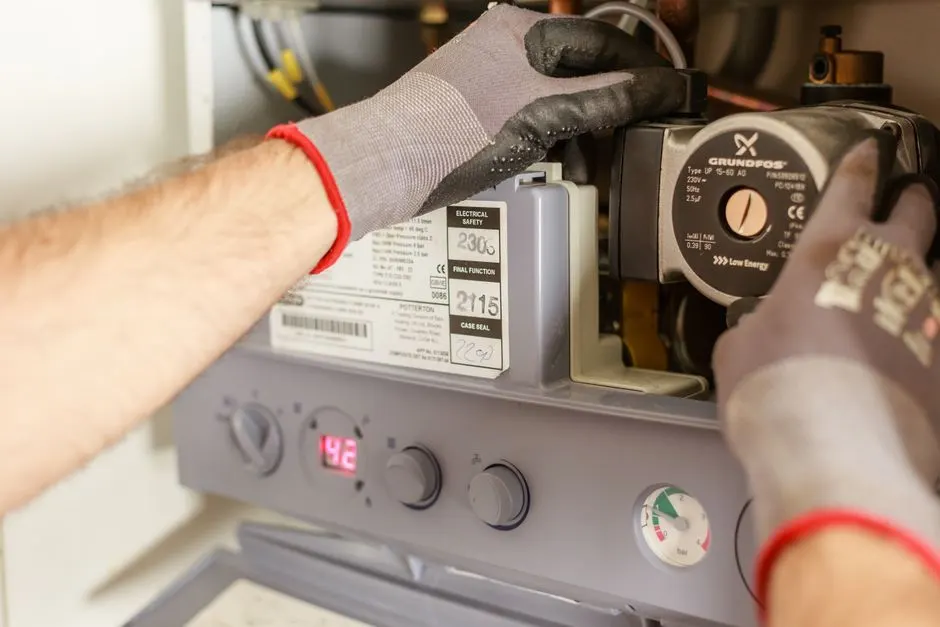
A Colorado furnace tune-up checklist is a written set of inspections and adjustments - filter, burners, blower, flue, thermostat, and safety controls - that you run once a year, ideally in early fall, to keep a furnace running through a Front Range winter. If you do nothing else, change the filter, clear the intake and exhaust vents, and have a technician test combustion and carbon monoxide before the first hard freeze.
We are Furnace Pros Colorado, and we run this exact list on furnaces from Fort Collins down to Pueblo every October and November. Below is the homeowner version you can knock out in half an hour, the technician version that requires tools and a combustion analyzer, plus 2026 pricing and the mistakes that turn a cheap tune-up into a mid-winter repair call.
What belongs on a Colorado furnace tune-up checklist
A complete furnace service checklist in Colorado covers three zones: the air side (filter, blower, ducts), the combustion side (burners, heat exchanger, flue), and the controls (thermostat, safety switches, gas valve). Miss the combustion side and you have cleaned a furnace without making it safer.
Colorado adds two wrinkles most national checklists skip. First, altitude. Most of the state sits between 5,000 and 9,000 feet, and at that elevation a gas furnace burns a leaner air-fuel mix than it did at sea level. Orifice sizing and manifold pressure have to be set for your elevation, not the factory default. Second, our temperature swing. A 65°F afternoon in Denver can drop to 15°F overnight in the same week, so a furnace cycles hard and short rather than running steady - which is exactly the pattern that exposes a weak ignitor or a dirty flame sensor.
If your system is older and you are weighing repair against replacement, our team covers both Furnace Repair in Colorado and full system swaps, so you get an honest read on which one your furnace actually needs.
The homeowner half: what you can check in 30 minutes
You can handle roughly a third of a furnace tune-up yourself with no tools beyond a screwdriver and a vacuum. Do these before you call anyone - it saves diagnostic time and sometimes solves the problem outright.
- Filter. Pull it and hold it up to a light. If you cannot see through it, replace it. Standard 1-inch filters in a Colorado home with pets or forced-air heat run 30 to 60 days; a 4-inch media cabinet goes 6 to 12 months.
- Thermostat. Swap batteries, then run heat for 10 minutes and confirm the blower kicks on. If the display is blank or the schedule reset itself, that is your problem, not the furnace.
- Return and supply registers. Walk every room. Closed or furniture-blocked returns starve the blower and drive up static pressure.
- Intake and exhaust terminations. Go outside. High-efficiency furnaces vent through PVC pipes at the side of the house, and snow, ice, or a bird nest in those pipes shuts the unit down. Clear them with a broom handle.
- Flue pipe (80% furnaces). Check the metal vent for rust flakes, sagging sections, or disconnected joints. Any of those means stop and call.
- Condensate line (high-efficiency). Find the plastic drain tube and make sure it is not kinked, frozen, or clogged with algae. A blocked condensate line is the number one no-heat call we get in January.
- Carbon monoxide alarms. Test every alarm on every floor. Replace the batteries whether they need it or not.
That is the DIY furnace tune-up checklist Colorado homeowners can safely run. Everything below the burner cover is a different story.
The technician half: what a real tune-up actually includes
A professional furnace tune-up checklist in Colorado runs 20 to 30 line items and takes 60 to 90 minutes on a single-stage furnace. Here is what we actually do on a visit, in order.
Combustion and safety testing
We pull the burner compartment cover and inspect the heat exchanger for cracks using a mirror and a combustion analyzer. We measure carbon monoxide in the flue - anything above 100 ppm in the undiluted flue gas gets investigated, and above 400 ppm the furnace gets shut down on the spot. We check the flame sensor and clean it with steel wool, because a coated sensor is the most common cause of a furnace that lights and then quits three seconds later.
Burner and gas-side service
Burners come out, get brushed, and get inspected for rust or misalignment. We verify manifold gas pressure against the data plate and adjust for your elevation. At 5,280 feet in Denver, that usually means a derate of roughly 4% per 1,000 feet above sea level - so a furnace rated at 100,000 BTU input at sea level is set closer to 80,000 BTU here. Skip that adjustment and you get a hot, sooting, short-lived furnace.
Air-side service
The blower wheel gets pulled and cleaned - a dirty squirrel cage throws the wheel out of balance and burns out the motor. We check the blower capacitor, amp draw, and the belt on older units. We inspect the evaporator coil if you have AC stacked on top, because a matted coil chokes airflow year-round.
Electrical and controls
We test the ignitor resistance, the inducer motor amp draw, the pressure switch, the limit switch, and the flame rollout switch. We verify the control board is sequencing correctly and that the thermostat is calibrated. We tighten every wire connection on the board - loose low-voltage terminals cause intermittent no-heat calls that are almost impossible to diagnose over the phone.
If your system is on its last legs, we also quote Furnace Replacement in Colorado at the same visit so you can compare a repair against a new unit with real numbers in front of you.
How often should you tune up a furnace in Colorado?
Once a year, every year, in September or early October. Colorado furnaces run 1,800 to 2,400 heating hours a season in the mountains and 1,200 to 1,600 along the Front Range, which is more than double what a furnace in Atlanta sees. That runtime is why annual service matters here and why skipping a year shows up as a breakdown, not a slow decline.
Two exceptions to the once-a-year rule:
- New furnace under warranty. Most manufacturers require documented annual maintenance to honor the parts warranty. Skip it and you can lose coverage on a heat exchanger that fails in year six.
- Rental or short-term rental property. Tune up in September and again in January if the unit runs hard. Guests do not change filters.
If you have never had the system serviced, or you bought the house and do not know the last service date, book an annual furnace tune up Colorado visit before the first cold snap. We see the backlog every year - the week after the first 20°F night, tune-up appointments push out two to three weeks.
What a furnace tune-up costs in Colorado in 2026
Typical 2026 pricing in this area runs $99 to $189 for a standard single-stage furnace tune-up, $189 to $279 for a two-stage or modulating high-efficiency unit, and $250 to $400 if you bundle furnace and duct cleaning. Emergency or after-hours service runs $250 to $450 just to walk in the door.
What drives the price up:
- System age and type. A 25-year-old 80% furnace with a pilot light takes longer than a 2019 high-efficiency unit.
- Access. A furnace in a finished basement closet with 18 inches of clearance is a slower job than one in an open mechanical room.
- Travel. Mountain and rural addresses - think Furnace Repair in Bailey or anywhere up a county road - usually carry a trip charge that Front Range cities do not.
- Parts. A tune-up price does not include parts. A new ignitor runs $40 to $120 installed; a flame sensor $60 to $150; an inducer motor $350 to $700.
What you get for the money: a clean furnace, a documented combustion reading, a filter change, and a written list of anything that is failing but not yet failed. That list is the real value - it lets you plan a repair in September instead of paying emergency rates in January.
Common mistakes we see on DIY furnace tune-ups
The mistakes that cost homeowners the most are not dangerous - they are just expensive. Here are the ones we run into every season.
- Using the wrong filter. A MERV 13 filter in a system designed for MERV 8 chokes airflow, overheats the limit switch, and shortens blower motor life. Match the filter to the furnace, not to the marketing.
- Vacuuming the burners with a shop vac. You knock the burner alignment out and leave lint in the orifices. Brush them, do not vacuum them.
- Spraying the flame sensor with contact cleaner. It leaves a residue that insulates the sensor. Steel wool or a dollar bill, nothing wet.
- Ignoring the condensate trap. On high-efficiency furnaces, the trap collects debris and algae all summer. If it is plugged in October, you have no heat in November.
- Testing the heat for two minutes. A furnace needs 10 to 15 minutes of runtime to reveal a limit switch that trips on temperature. A two-minute test proves nothing.
- Skipping the CO test. You cannot smell carbon monoxide and you cannot see a cracked heat exchanger from the outside. This is the one item that genuinely requires a technician.
If you have already made one of these and the furnace is acting up, our furnace maintenance Colorado techs can usually undo the damage in a single visit.
When to call a professional
Call us when the furnace smells like gas, when the CO alarm goes off, when the burners light and shut off within seconds, when you see soot or rust flakes around the burner compartment, or when the furnace runs but the house never gets warm. Those are not tune-up items - they are diagnostic calls.
We also want the call if your furnace is over 15 years old and has never been serviced. At that age, a tune-up is really an inspection, and what we find usually decides whether you spend $300 on a repair or $4,500 on a new furnace. Furnace Pros Colorado handles both, and we will tell you which one makes sense for your house rather than pushing the bigger ticket.
One more thing: if you are in a mountain town or a rural county, book earlier than Front Range homeowners. Our schedule fills first in the foothills and high country because drive times are longer and the heating season starts a month sooner.
Frequently Asked Questions
What should be on a furnace tune-up checklist in Colorado?
At minimum: filter replacement, blower cleaning, burner inspection, flame sensor cleaning, heat exchanger inspection, combustion and carbon monoxide testing, manifold pressure check adjusted for altitude, inducer and ignitor testing, condensate line clearing, and thermostat calibration. Colorado furnaces also need the intake and exhaust terminations checked for snow and ice blockage before every season.
How often should I tune up my furnace in Colorado?
Once a year, in September or early October. Colorado furnaces run 1,200 to 2,400 heating hours per season depending on elevation, roughly double the national average, so annual service is the minimum. If your furnace is under manufacturer warranty, skipping a year can void heat exchanger coverage.
Can I do a furnace tune-up myself in Colorado?
You can do the air side safely: change the filter, test the thermostat, clear the outdoor vents, check the condensate line, and test your CO alarms. You cannot safely test combustion, inspect the heat exchanger, or set manifold pressure for altitude without a combustion analyzer and a manometer. Leave those to a licensed technician.
How long does a professional furnace tune-up take?
Sixty to ninety minutes for a standard single-stage furnace, and up to two hours for a modulating high-efficiency unit or a system that has not been serviced in several years. Add 15 to 30 minutes if the furnace is in a tight closet or you have bundled duct cleaning.
Will a tune-up lower my heating bill in Colorado?
Yes, typically 5% to 15%. A clean blower, a properly gapped burner, and a filter that actually passes air all reduce runtime. On a $180 monthly winter gas bill, that is $9 to $27 a month - which usually covers the cost of the tune-up before the season ends.
Get help with Furnace Repair in Colorado
If your checklist turned up something you would rather not touch - a cracked heat exchanger, a furnace that short-cycles, or a CO reading you do not like - we can be at your door with the tools to diagnose it properly. Our technicians serve the Front Range, the foothills, and the Western Slope, and we quote the repair before we start.
Call Furnace Pros Colorado at (833) 588-3896 to schedule your tune-up or repair.